
📌 A Development Model of Instructional Competence in English for Careers for Vocational Teachers
วันที่จัดกิจกรรม 9/20/2026
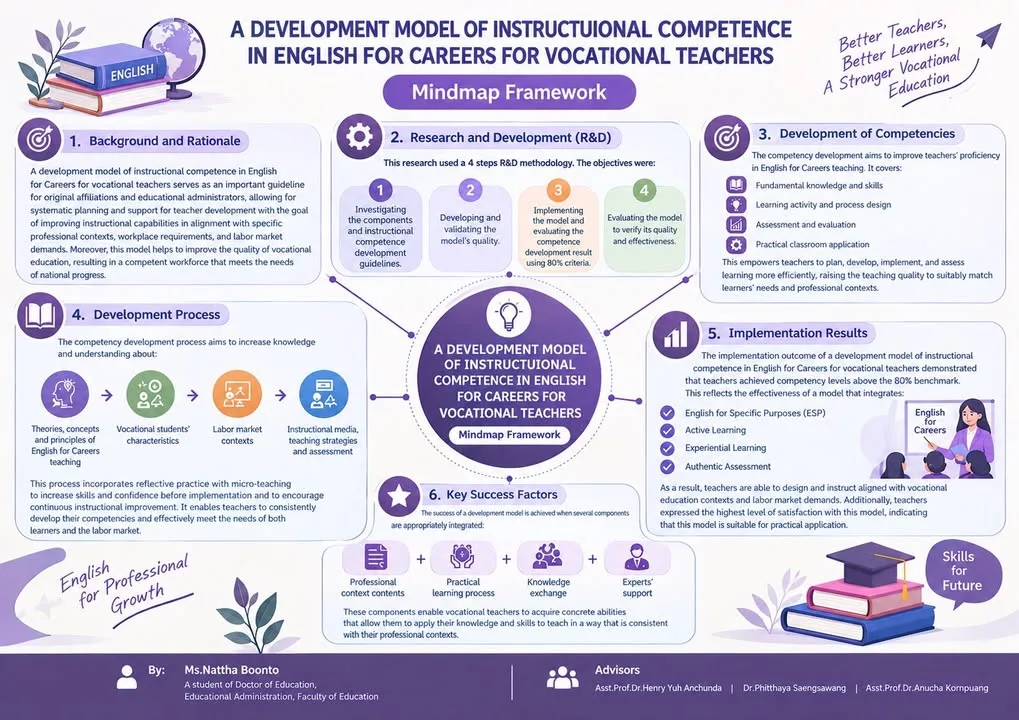
📌 A Development Model of Instructional Competence in English for Careers for Vocational Teachers Improving vocational students' English proficiency begins with systematically empowering vocational
📌 A Development Model of Instructional Competence in English for Careers for Vocational Teachers
Improving vocational students' English proficiency begins with systematically empowering vocational teachers. Research by Ms. Nattha Boonto (Doctor of Education in Educational Administration, Faculty of Education, Naresuan University) presents a tailored model designed to meet workplace and labor market demands.
⚙️ 4-Step R&D Process
R1 - Study: Investigated components and guidelines for English for Careers teaching competence.
D1 - Design & Dev: Developed and validated the model's quality with experts.
R2 - Experiment: Implemented the model and evaluated teacher competence against an 80% benchmark.
D2 - Evaluate: Assessed post-implementation quality, effectiveness, and satisfaction.
🎯 Key Focus Areas
ESP Knowledge: Core concepts, theories, and labor market awareness.
Instructional Design: Active Learning and professional context-aligned activities.
Authentic Assessment: Practical measurement and evaluation methods.
Hands-on Application: Micro-teaching, reflective practice, and classroom implementation.
🏆 Core Outcomes
Exceeded Benchmark: Teachers achieved competency levels above the 80% criteria.
Highest Satisfaction: Participants rated the model's effectiveness and usability at the highest level.
Practical Impact: Enabled teachers to confidently design and deliver career-specific English instruction.
💡 Success Factors: Practical integration of profession-specific content, Experiential Learning, peer exchange, and expert mentorship.
Advisors: Asst. Prof. Dr. Henry Yuh Anchunda | Dr. Phitthaya Saengsawang | Asst. Prof. Dr. Anucha Kornpuang
#EducationalResearch #EducationalAdministration #EnglishForCareers #VocationalTeachers #TeacherDevelopment #ActiveLearning
🔥 ไม่ใช่แค่สร้างโมเดล แต่ต้องตอบให้ได้ว่า “พัฒนาครูอย่างไร และครูเอาไปใช้อะไรได้จริง”
งานวิจัย A Development Model of Instructional Competence in English for Careers for Vocational Teachers พัฒนาโมเดลด้วยกระบวนการ Research & Development (R&D) 4 ขั้นตอน ได้แก่ (1) ศึกษาองค์ประกอบและแนวทางการพัฒนาสมรรถนะการสอน (2) พัฒนาโมเดลและตรวจสอบคุณภาพ (3) นำโมเดลไปใช้และประเมินสมรรถนะ โดยใช้เกณฑ์อ้างอิง 80% และ (4) ประเมินคุณภาพและประสิทธิผลของโมเดล
🎯 แล้วพัฒนาครูอย่างไร? กระบวนการไม่ได้เน้นการฟังบรรยายเพียงอย่างเดียว แต่พัฒนาตั้งแต่ความรู้และหลักการของ English for Careers → การเข้าใจลักษณะผู้เรียนอาชีวศึกษา → การเชื่อมการสอนกับบริบทตลาดแรงงาน → การออกแบบสื่อ กิจกรรมการเรียนรู้ กลยุทธ์การสอนและการประเมินผล พร้อมใช้ Reflective Practice และ Micro-teaching เพื่อให้ครูได้ทดลองสอน สะท้อนผล และปรับปรุงก่อนนำไปใช้จริง
🚀 สิ่งที่ครูนำไปใช้ได้จริง คือความสามารถในการออกแบบการเรียนภาษาอังกฤษที่สัมพันธ์กับอาชีพ ไม่ใช่สอนภาษาอังกฤษแบบทั่วไป เช่น วิเคราะห์ว่าผู้เรียนแต่ละสาขาต้องใช้ภาษาอังกฤษเพื่ออะไร ออกแบบกิจกรรมที่จำลองสถานการณ์การทำงาน เลือกสื่อและวิธีสอนให้ตรงกับผู้เรียน และประเมินจากความสามารถในการใช้ภาษาในสถานการณ์จริง โดยโมเดลบูรณาการ English for Specific Purposes (ESP) + Active Learning + Experiential Learning + Authentic Assessment
📈 ผลที่เกิดขึ้น ตามข้อมูลในภาพ ผลการนำโมเดลไปใช้พบว่าสมรรถนะของครูหลังการพัฒนา สูงกว่าเกณฑ์อ้างอิง 80% และครูมีความพึงพอใจต่อโมเดลในระดับสูงสุด ดังนั้นคุณค่าของงานจึงไม่ได้อยู่ที่การมี “โมเดลหนึ่งโมเดล” แต่อยู่ที่การสร้างกระบวนการที่ทำให้ Knowledge → Practice → Competency → Classroom Application เชื่อมต่อกัน
💡 ตัวอย่างการนำไปใช้ให้เห็นภาพ ครูสาขาการโรงแรมอาจเปลี่ยนจากการสอนบทสนทนาภาษาอังกฤษทั่วไป เป็นสถานการณ์ Hotel Check-in / Handling Guest Complaints ครูสายช่างอาจออกแบบกิจกรรม Explaining Safety Procedures หรือ Reading Technical Instructions และครูสายธุรกิจอาจใช้ Job Interview, Customer Communication หรือ Business Presentation จากนั้นประเมินผู้เรียนจากภาระงานหรือสถานการณ์เสมือนจริง แทนการวัดจากการจำคำศัพท์เพียงอย่างเดียว
นี่คือจุดที่งานวิจัยทางการศึกษาควรไปให้ถึง — ไม่ใช่เพียง “สร้างองค์ความรู้” แต่ต้องทำให้องค์ความรู้นั้นเปลี่ยนการสอน และท้ายที่สุดสร้างสมรรถนะที่ผู้เรียนสามารถนำไปใช้ในโลกการทำงานได้จริง
Research → Teacher Competency → Classroom Practice → Learner Skills → Workforce Readiness
#EnglishForCareers #VocationalEducation #TeacherCompetency #ESP #ActiveLearning #AuthenticAssessment #TeacherDevelopment #EducationalInnovation #ResearchAndDevelopment #VocationalTeachers #FutureSkills
ดูโพสต์ต้นฉบับบนเฟสบุ๊ค